

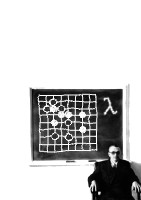
Kurt is a Computer Go program written in Haskell.
It is named after the logician Kurt Gödel and written by Fabian Linzberger.
Source code is available online on github.
Comments and contributions always welcome!
It has also played online on the Kiseido go server (KGS) with the nick "kurtBot". It is only playing on 9x9 and its strength there is about 25 kyu.
KGS also provides an archive of all of kurtBots games.
Fresh orbs prepare the Haskell toolchain and build Kurt automatically. See Accessing Kurt in an Amp orb for Terminal testing, the browser Go board portal, and optional temporary SSH access.
The dependency-free web bridge provides a 9×9 board for playing Black against a local Kurt process. Each browser session owns an isolated engine, and the bridge only launches the repository's scripts/kurt-gtp command.
Run it locally:
scripts/kurt-web --port 8080Then open http://127.0.0.1:8080. Run the focused bridge tests with:
python3 -m unittest discover -s test -p 'test_web_bridge.py' -vRun the browser request-recovery logic tests with Node.js 18 or newer (no packages required):
node --test test/test_web_ui.cjsIf a move response is lost, the browser reads the current game before allowing another move; it never automatically resubmits a move. If Kurt itself times out or loses GTP synchronization, the game stops and asks you to start a new game. Bridge logs include request durations and flush immediately for troubleshooting.
After two passes, the sidebar counts stones plus empty territory bordered by only that color, with 7.5 komi for White. Shared or unclaimed empty regions are neutral. Captures are not added separately. All stones remaining on the board count as alive; the bridge does not detect or remove dead stones. Resignation shows a win by resignation, not a counted score.
In an Amp orb, start the supervised bridge and print its portal URL:
amp orb services ensuredocker run -i lefant/kurt
(adjust env variables!)
NAME=myBot PASSWORD=secret KGSGTP_ARGS='opponent=lefant' docker-compose up
This is a small legacy maintenance repository. Add documentation only when it has durable value; do not create empty documentation directories.
docs/orb-access.md: Current operational access guidance.docs/brainstorms/: Requirements and design exploration.docs/plans/: Implementation plans for non-trivial changes.docs/solutions/: Verified reusable Haskell, GTP, and workflow lessons, organized by category with YAML frontmatter (module,tags,problem_type).docs/research/,docs/devlog/,docs/specs/,docs/decisions/, anddocs/changelog/: Create only when a change needs that type of durable record.
Workflow: Research/Plan → Implement → Review → Compound
Understand the current GTP behavior and old-toolchain constraints before planning.
Implement the smallest change, run the relevant Cabal and GTP checks, review protocol
correctness and coverage, then capture only genuinely reusable learning in
docs/solutions/. Put durable research in docs/research/, plans in docs/plans/,
and meaningful session outcomes in docs/devlog/.
Prefer Compound Engineering skills or an equivalent workflow bundle when available.
Use verified names and output paths. Supporting documentation skills are
feature-specs, architecture-decision-records, changelog-fragments, devlog,
and atomically-land; recommend missing skills rather than assuming they are
installed. Use docs/ for new work even when an older template says
thoughts/shared/.
Commit small, reviewable checkpoints and push only after authorization for the agreed remote and branch.