








I write backend software for a living — cybersecurity and PKI with the Namirial Group — and frameworks, developer tools and small products for fun. Mostly Python and Go, almost always around APIs. I work AI-first: prompt engineering and agentic programming are part of how I design, build and test.

Outside the day job I build Hinoki, a typed Python API framework with a Rust core, and maintain django-ninja-aio-crud (50+ stars), its Go counterpart goninja and shimwire, an OpenAPI mock-and-test CLI. More below.


- Building async CRUD/backend infrastructure in Python and Go
- Integrating LLMs into production backends — tool calling, agentic workflows, structured outputs, RAG, async/streaming inference
- Exploring system design and architecture patterns for async services

Frontend work is used in my projects, with AI assistance for the implementation.

Handlers in Python, a core in Rust. What I am building right now.





Documentation · Quick start · Tutorial · Examples · Source
An endpoint declares its types, who may call it, whether it runs in a transaction and which errors it returns. That one declaration drives routing, validation, the OpenAPI document and the optional rules that hinoki check runs against your source — so the architecture of the app is something you can verify, not something you remember.
The pieces are plain Python, one per file. Here is the task tracker from the repository's examples, abridged:
# security.py: who may call. One reusable policy.
member_only = Access(auth=MemberTokens(), permissions=[USE])

# schemas.py: what crosses the boundary. A model column reaches a client only through a Schema.
class TaskIn(Schema):
    title: Annotated[str, Field(min_length=1, max_length=120)]

@derive(Task, exclude=("owner_id",))
class TaskOut(Schema): ...

# api.py: the endpoint. Access and transactions are stated once for the whole group.
tasks = RouteGroup("/tasks", access=member_only, atomic=True)

@tasks.post("/", status=201)
async def create_task(data: TaskIn, caller: Caller[Member]) -> TaskOut:
    return await operations.create_task(caller.user.id, data)
Routing, input validation, the OpenAPI document and the docs come from those declarations. Add a handler without an access policy and hinoki check reports it with the file, the line and the rule (sample from the Rules guide):
tests/projects/rulesapp.py:12: HNK-ACC-001 [violated] POST /items (create) declares no access policy

- Declared — access, transactions and errors are options of the decorator or defaults of a route group, and they land in OpenAPI.
- Checked — eleven built-in rules (access, permissions, transactions, exposed fields, imports and more); a new project turns on eight. Every finding has a file, a line and a fix.
- Strict — input is validated without coercion and unknown fields are refused. A response carries only what its
Schemanames. - Explicit — nothing connects at import. Tables change only through SQL migration files you review and apply.
- Rust core — path matching, schema validation, cryptography and database execution run in a compiled extension, and apps run on Kiso, Hinoki's own Rust HTTP server (Granian is optional). Handlers stay Python, sync or async.
- Included — typed schemas and settings, generated OpenAPI, an ORM for PostgreSQL, SQLite, MySQL and MariaDB, generated CRUD, test clients, MCP tools and an optional admin.
 Admin · Studio |
 Admin · Console |
Note
Hinoki is pre-alpha and not released: the API and the migration format may change, and I make no performance claims. Try it from a source checkout, with disposable data: git clone https://github.com/caspel26/hinoki, then follow the quick start.
django-ninja-aio-crud · features, install, demo
Async dynamic CRUD framework for Django Ninja.
- ⚡ Async-first API generation
- 🔐 Built-in authentication
- 🔎 Filtering & pagination
- 🧩 Dynamic model CRUD
- 📦 Automatic serialization
- 🤖 MCP server for AI agents — expose ViewSets as tools any MCP client can call directly, zero glue code
- 🐍 Django + Django Ninja
Documentation · PyPI · GitHub
pip install django-ninja-aio-crud


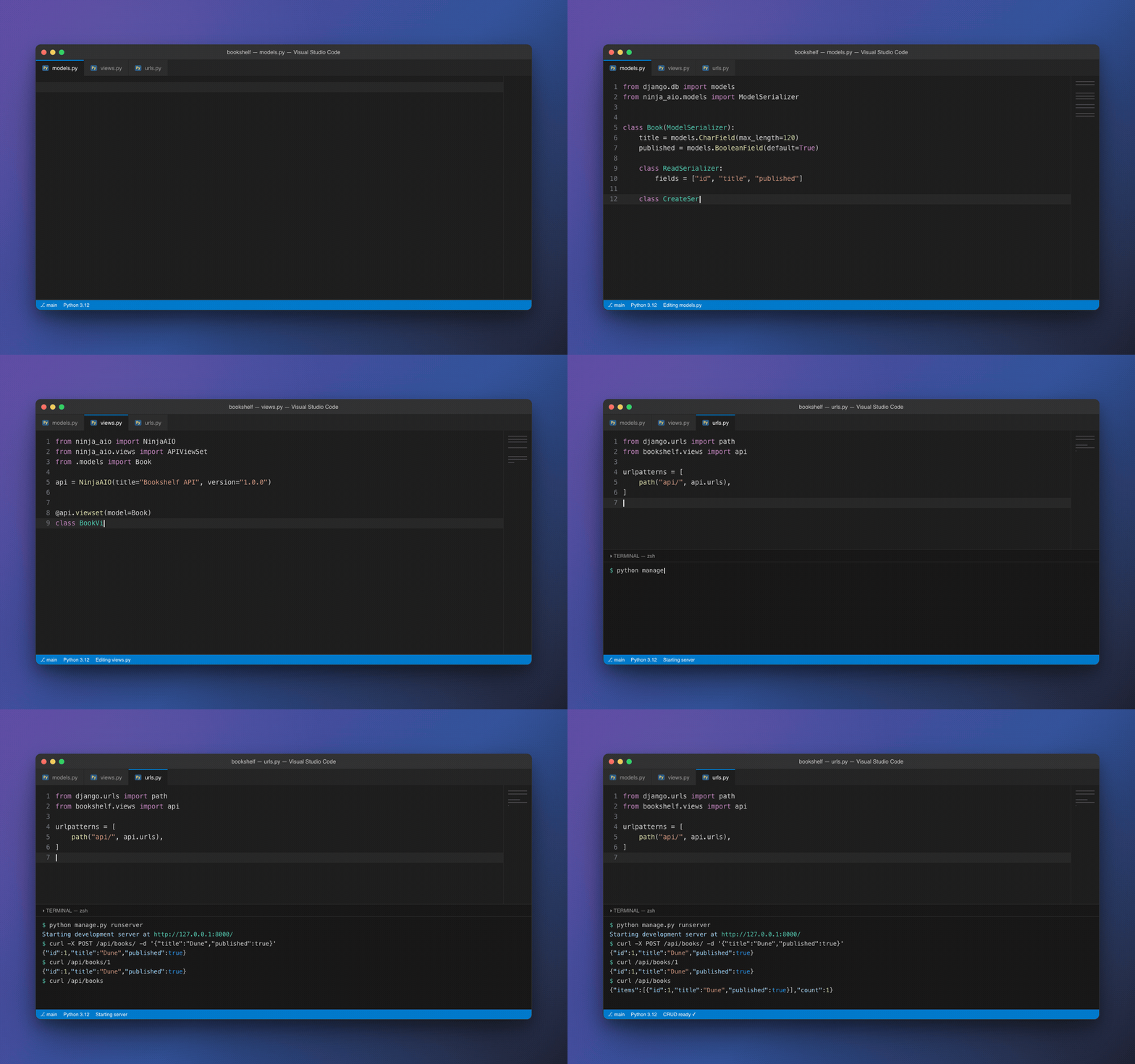
goninja · features, install, demo
Code-first CRUD REST APIs for Go, generated from annotated structs.
- 🧬 Annotate a struct, run one command, get real
.gofiles you commit - 🚫 Zero reflection on the request path — a bad tag fails
go build, not production - 🧷 Output types are separate structs, so a field can't leak into a response
- 🪢 No N+1 by construction —
listnever preloads,retrievepreloads what it carries - 🔎 Filters, range queries, ordering and limit/offset pagination
- 🔐
Authenticatorobjects, per-route policy, reflected into the OpenAPI security schemes - 📘 OpenAPI 3.0 with Swagger UI and ReDoc embedded — no external CDN
- 🐹 Plain
net/http+ GORM, no custom router
Documentation · Changelog · GitHub
go install github.com/caspel26/goninja/cmd/goninja@latest


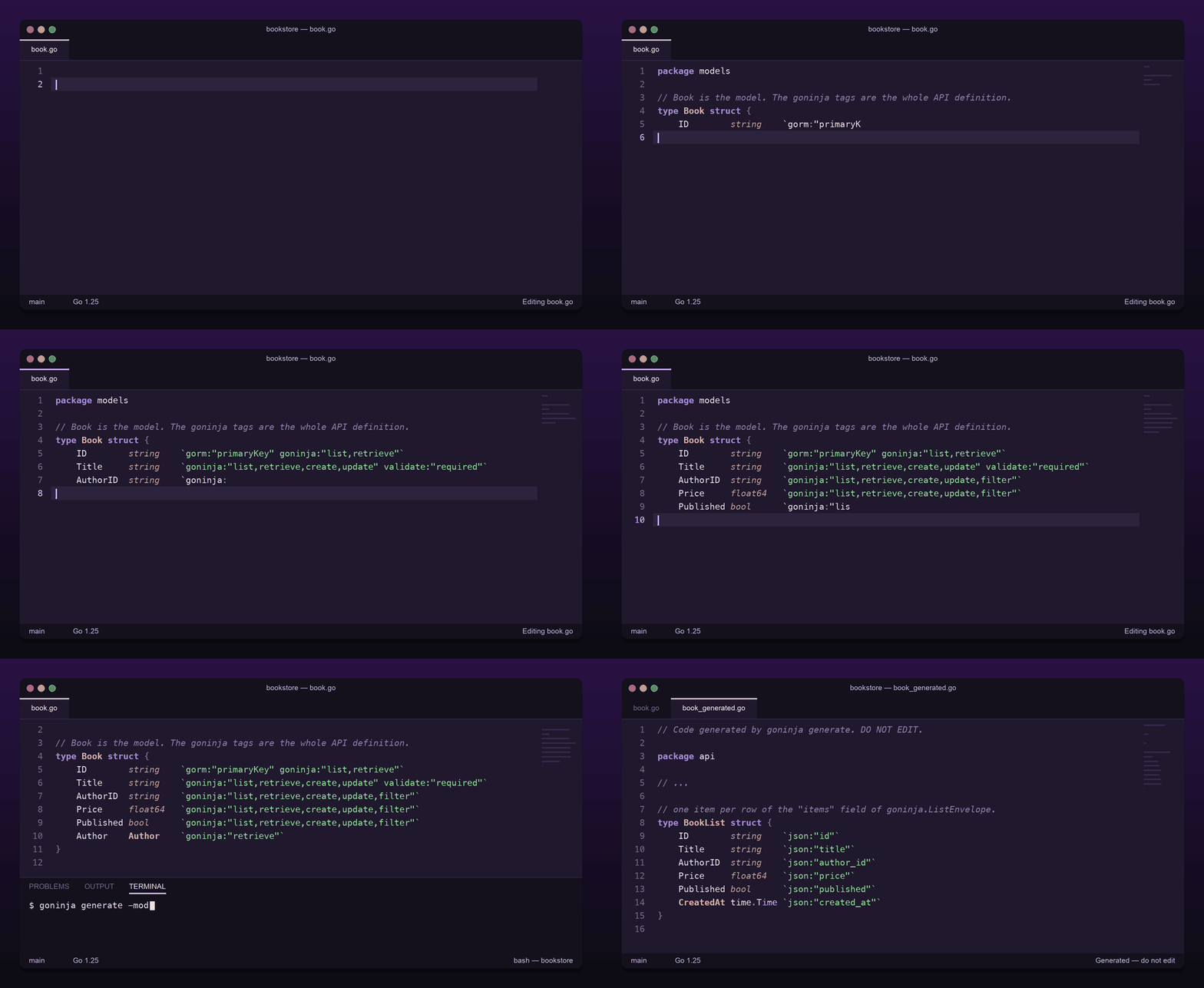
shimwire · features, install, demo
One CLI for both sides of an API you don't fully control yet — mocks the parts that aren't built, and tests the parts that are, from a single OpenAPI/Swagger spec.
- 🔀 Spec-driven mock server and test collections, from one shared engine
- 📁 Git-native collections — plain TOML, reviewable in a normal PR diff
- 🎭 Schema-aware fake data, not just random junk
- 🎯 Overrides for status/latency/exact-body edge-case testing
- 🖱️ Guided interactive menu, or full CI-friendly flags
- 📊 HTML reports and
--fail-on-errorfor CI - 🤖 MCP server — an AI agent can inspect a spec, scaffold a project, and verify it actually works, without knowing shimwire's flags
npm install -g shimwire


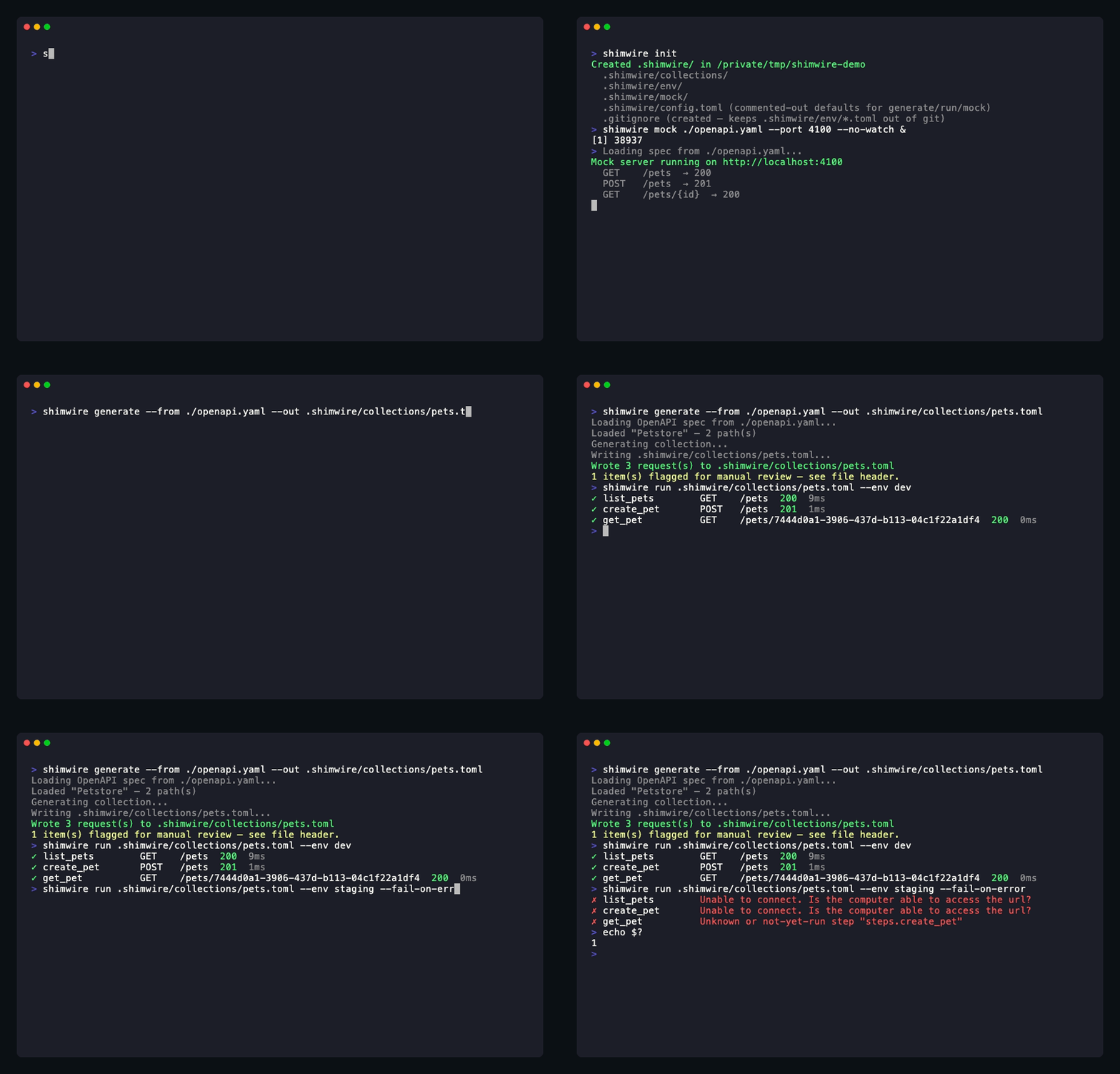
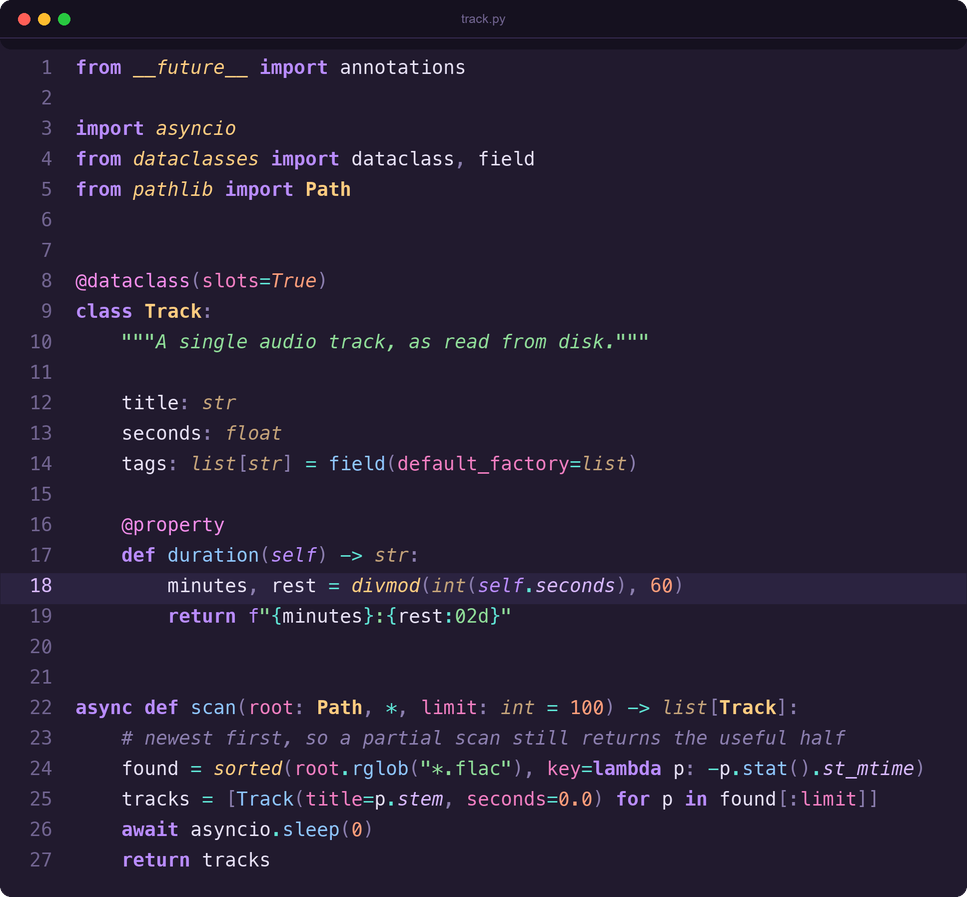
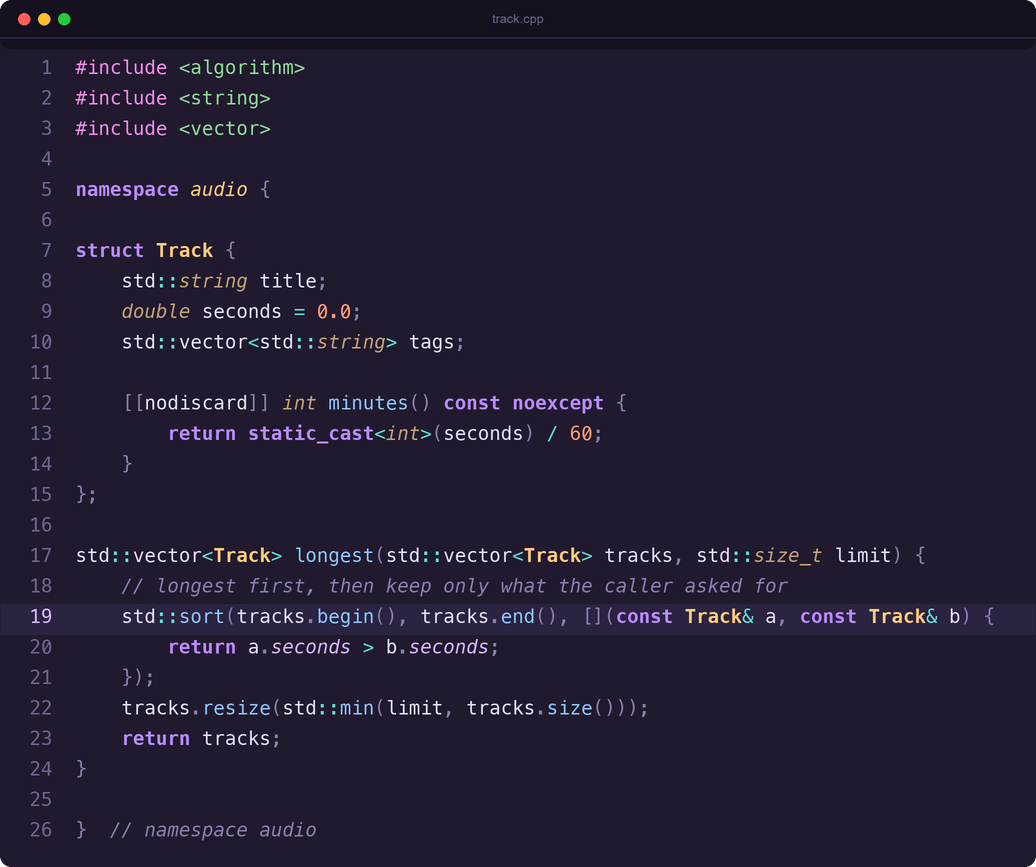
lilac-nights · features, install, previews
A dark VS Code theme with a lilac spine — built to be read for eight hours straight.
- 🟣 Purple carries the structure — keywords, properties, decorators
- 🎨 Every other hue has exactly one job, so nothing looks alike by accident
- 🔍 Semantic-token aware, down to
variable.classMemberfor Python attributes - ♿ Every syntax color clears WCAG AA against the editor background
- 🖥️ Full workbench, terminal ANSI, diff, debug and notebook coverage
codium --install-extension caspel26.lilac-nights


Previews — click a language to open it here:


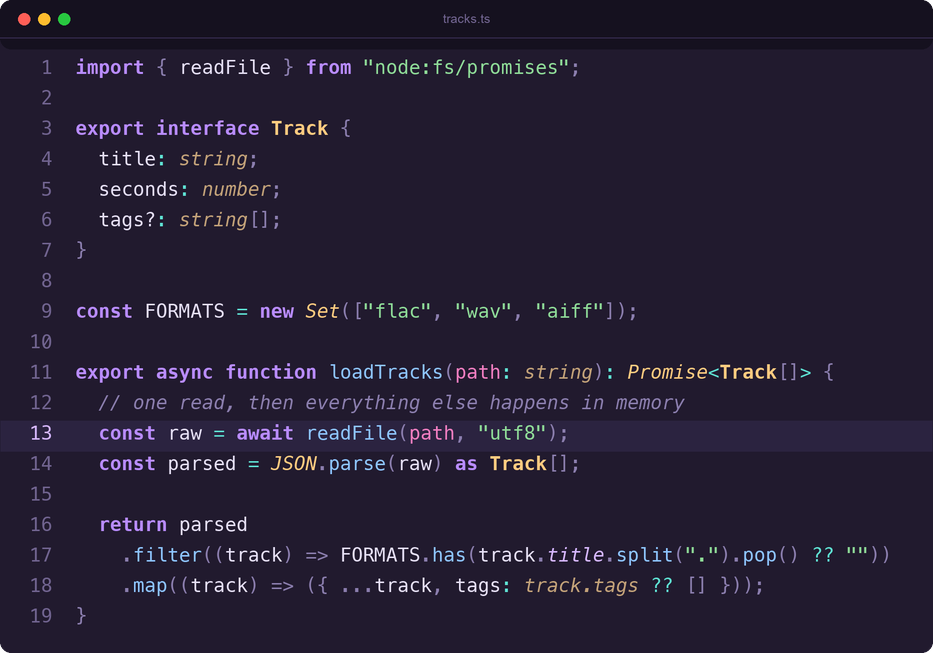

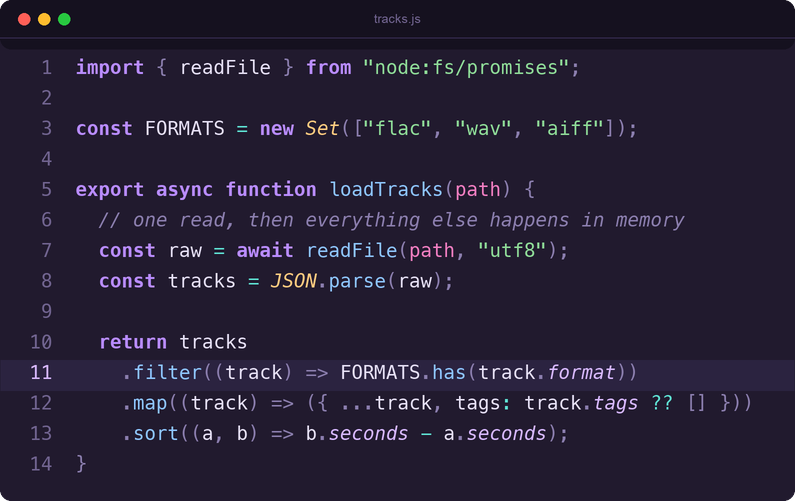

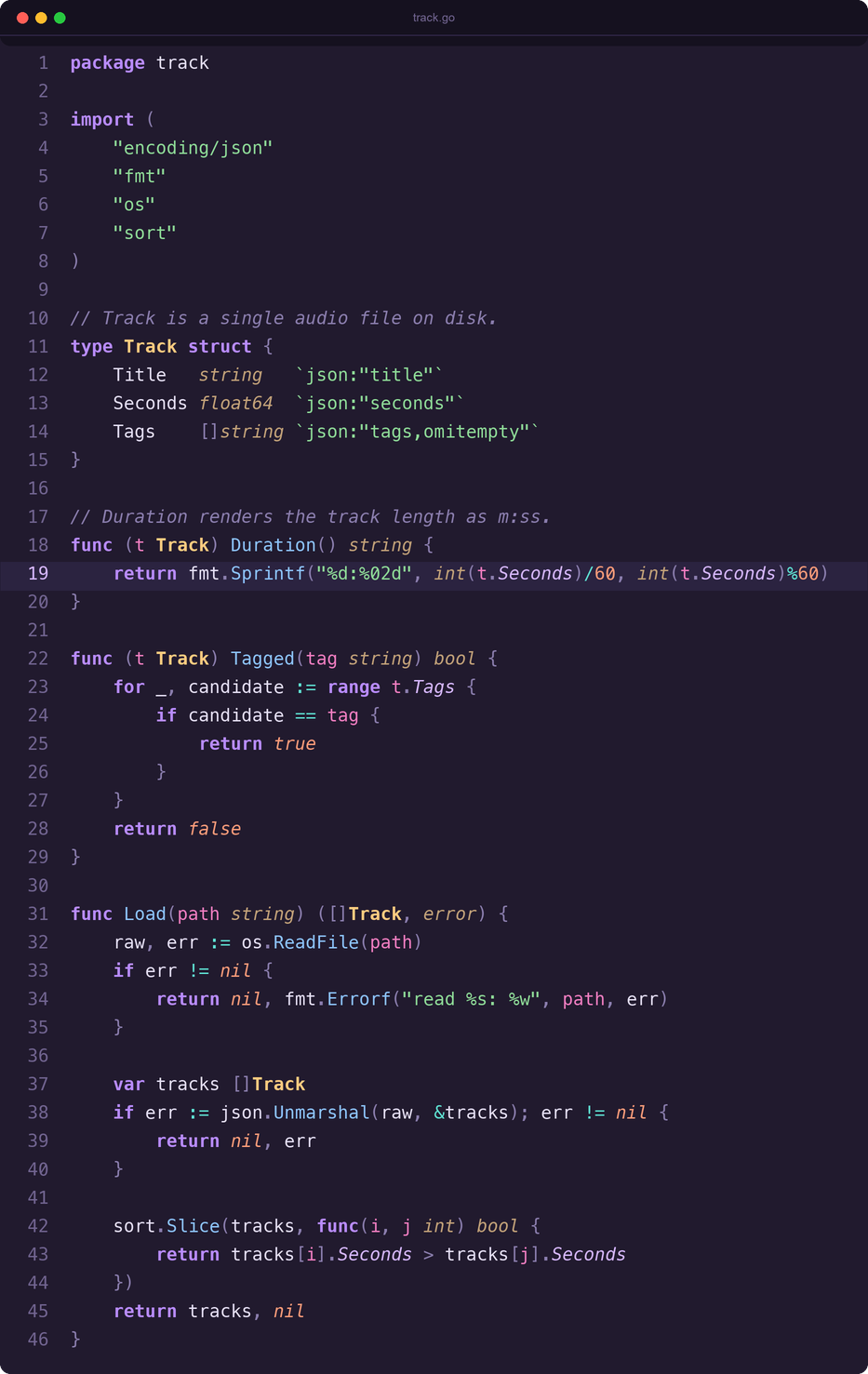

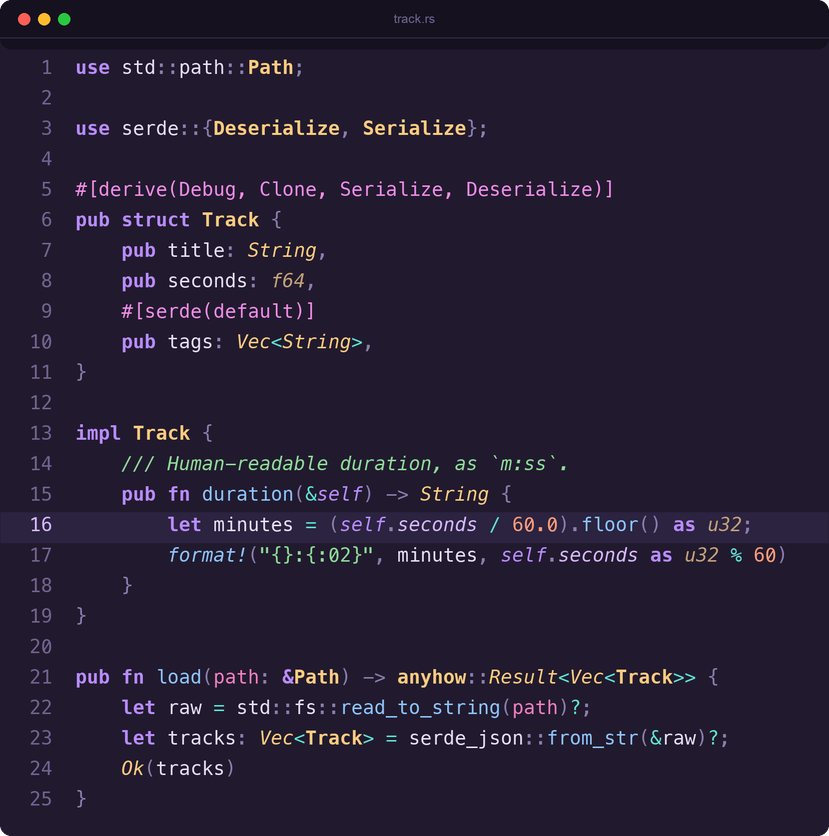

- Shiori — an anime discovery and tracking product, in public beta (Go, PostgreSQL)
- mana-oly-tools — community calculators, planners and trackers for Olympus Prison on ManaCube
- ninja-aio-blog-example — production-oriented example integrating django-ninja-aio-crud with JWT (RS256) authentication
- ssh-manager — a Vue-based SSH connection manager
- password_manager — a desktop password manager (Electron, Vue 3, TypeScript) that keeps credentials in encrypted local vault files


